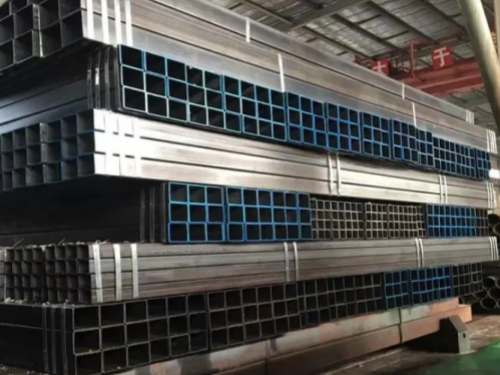
Fin tubes are critical heat transfer components widely used in boilers, heat exchangers, waste heat recovery systems, and power generation equipment. Among various fin tube manufacturing technologies, High-Frequency Welded (HFW) fin tubes and Laser Welded fin tubes are the two most commonly adopted solutions.
Although both aim to create a strong metallurgical bond between the fin and the base tube, they differ significantly in welding principles, performance characteristics, dimensional parameters, and application focus.
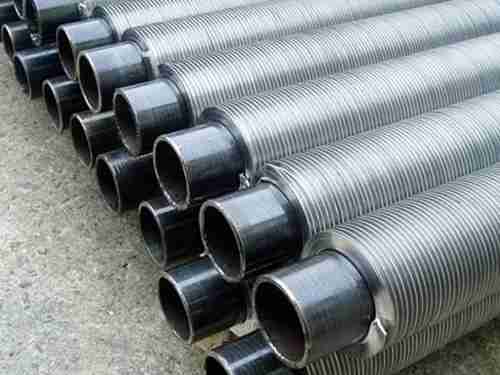
- Different Manufacturing Processes
High-Frequency Welded (HFW) Fin Tubes
In the high-frequency welding process, a continuous fin strip is helically wound onto the base tube edgewise. High-frequency electrical current is then applied to the fin and tube.
Due to the skin effect and proximity effect, the contact surfaces are rapidly heated to a plastic or near-melting state. Welding is completed under mechanical pressure, forming a solid-phase metallurgical bond without filler material. The process is continuous, stable, and suitable for large-scale production.
Laser Welded Fin Tubes
Laser welded fin tubes use a high-energy-density laser beam as the heat source. The laser precisely melts the contact area between the fin and the tube surface, forming a weld seam upon solidification of the molten pool.
The process is typically conducted under a protective atmosphere and allows extremely localized heat input, resulting in high weld precision and minimal thermal distortion.
- The Respective Strengths
Strengths of High-Frequency Welded Fin Tubes
Continuous, uniform weld along the fin root
High production speed and efficiency
Relatively small heat-affected zone compared with traditional welding
Strong fin-to-tube bonding, suitable for vibrating conditions
Mature technology with lower equipment and production cost
Widely compatible with carbon steel and stainless steel materials
Strengths of Laser Welded Fin Tubes
Extremely high energy density and precise heat control
Very small heat-affected zone
Excellent weld appearance and consistency
High joint strength and corrosion resistance
Ability to weld dissimilar materials (e.g., steel–copper, steel–aluminum)
Superior heat transfer efficiency due to precise fin attachment
- Parameter Differences
Typical Parameters of High-Frequency Welded Fin Tubes
Tube outer diameter: approx. 15.88–273 mm
Tube wall thickness: 2–28.6 mm
Fin height: 8–35 mm
Fin thickness: 0.3–3.5 mm
Fin pitch: 4–10 mm (1–8 FPI)
Maximum tube length: up to 28,000 mm
Typical welding frequency: ~400 kHz
Common materials:
Carbon steel, low-carbon steel, alloy steel, stainless steel (TP304/316/321), duplex and super duplex steels
Typical Parameters of Laser Welded Fin Tubes
Tube outer diameter: 8–50 mm
Tube wall thickness: generally ≥1.0–2.0 mm
Fin height: 5–17 mm
Fin thickness: 0.3–1.0 mm
Fin pitch: 2–10 mm (5–13 FPI), adjustable along tube length
Maximum tube length: up to 12,000 mm
Weldable material combinations:
Stainless steel–stainless steel, carbon steel–carbon steel, steel–copper, copper–copper
Key Parameter Comparison
Fin height and thickness: HFW allows thicker and higher fins
Fin pitch precision: Laser welding enables finer and variable fin spacing
Material adaptability: Laser welding supports more dissimilar material combinations
- Application Differences
Applications of High-Frequency Welded Fin Tubes
Boiler economizers and air preheaters
Waste heat recovery boilers
Power generation and gas turbine heat recovery
Petrochemical furnaces and heat exchangers
Air coolers, radiators, condensers, evaporators
HVAC systems
High-temperature and high-pressure environments
Equipment operating under vibration
HFW fin tubes are preferred when cost efficiency, robustness, and large heat transfer area are required.
Applications of Laser Welded Fin Tubes
Industrial and utility boilers
Heat recovery plants and waste heat power generation
Chemical and process industries
Heating systems and wall-hung boilers
Marine and shipbuilding applications
Cooling towers and dry / wet cooling systems
High-performance heat exchangers requiring compact design
Laser welded fin tubes are favored in applications demanding high efficiency, precision, corrosion resistance, and long service life.
High-Frequency Welded Fin Tubes vs Laser Welded Fin Tubes
|
Parameter
|
High-Frequency Welded Fin Tubes (HFW)
|
Laser Welded Fin Tubes
|
|
Welding Principle
|
High-frequency current + pressure (solid-phase welding)
|
High-energy laser beam fusion welding
|
|
Heat Affected Zone (HAZ)
|
Small
|
Very small / minimal
|
|
Weld Appearance
|
Continuous, robust
|
Smooth, precise, uniform
|
|
Tube Outer Diameter
|
15.88 – 273 mm
|
8 – 50 mm
|
|
Tube Wall Thickness
|
2 – 28.6 mm
|
≥1.0 – 2.0 mm (typical)
|
|
Fin Height
|
8 – 35 mm
|
5 – 17 mm
|
|
Fin Thickness
|
0.3 – 3.5 mm
|
0.3 – 1.0 mm
|
|
Fin Pitch
|
4 – 10 mm (1–8 FPI)
|
2 – 10 mm (5–13 FPI), variable
|
|
Maximum Tube Length
|
Up to 28,000 mm
|
Up to 12,000 mm
|
|
Welding Speed
|
High, continuous production
|
Medium, high precision
|
|
Production Efficiency
|
Very high
|
Moderate
|
|
Material Compatibility
|
Carbon steel, alloy steel, stainless steel, duplex
|
Carbon steel, stainless steel, copper, aluminum, mixed materials
|
|
Dissimilar Material Welding
|
Limited
|
Excellent
|
|
Cost Level
|
Lower
|
Higher
|
|
Typical Standards
|
ASTM A179, A192, A213, A106
|
Project / custom-based
|
How to choose Fin Tube?
Choosing between high-frequency welded fin tubes and laser welded fin tubes depends on your operating conditions, performance requirements, and budget constraints. The following decision logic is widely used in engineering procurement.
Choose High-Frequency Welded Fin Tubes If:
Your project requires large quantities and stable mass production
Operating conditions are high temperature and high pressure
The system involves vibration or mechanical stress
You need larger fin height or thicker fins
Cost control is a key factor
Typical applications include:
Boiler economizers and air preheaters
Waste heat recovery boilers
Power plant heat exchangers
HVAC and industrial air coolers
Engineering conclusion:
HFW fin tubes offer the best balance of cost, strength, and production efficiency for conventional industrial heat transfer systems.
Choose Laser Welded Fin Tubes If:
Heat transfer efficiency is the primary design objective
Space is limited and a compact heat exchanger is required
The application involves corrosive media
You need fine or variable fin pitch
Dissimilar material combinations are required (e.g., steel–copper)
Typical applications include:
High-efficiency industrial boilers
Chemical and process heat exchangers
Waste heat power generation
Marine and shipbuilding equipment
Wall-hung and compact boilers
Engineering conclusion:
Laser welded fin tubes are ideal for high-performance, high-efficiency, and long-life systems, especially where material optimization and precision matter.
FAQ – High-Frequency vs Laser Welded Fin Tubes
Q1: What is the main difference between high-frequency and laser welded fin tubes?
A1: High-frequency welding uses electrical current and pressure, while laser welding uses a high-energy laser beam for precise fusion.
Q2: Which fin tube type offers better heat transfer efficiency?
A2: Laser welded fin tubes generally provide higher heat transfer efficiency due to precise fin attachment.
Q3: Can laser welded fin tubes weld dissimilar materials?
A3: Yes, laser welding can join different materials such as steel and copper.
Q4: Which fin tube is more cost-effective for large projects?
A4: High-frequency welded fin tubes are typically more cost-effective for large-scale industrial applications.
Q5: Are high-frequency welded fin tubes suitable for vibrating conditions?
A5: Yes, their continuous solid-phase weld provides excellent resistance to vibration.

 English
 Español