Quick Answer
To select the right carbon steel pipe, evaluate these key factors:
Manufacturing process (seamless or welded)
Surface quality (smooth, defect-free)
Chemical composition (carbon and alloy content)
Size and specifications (OD, wall thickness, length)
Supplier reliability and price
Choosing the correct combination ensures strength, durability, and application safety.
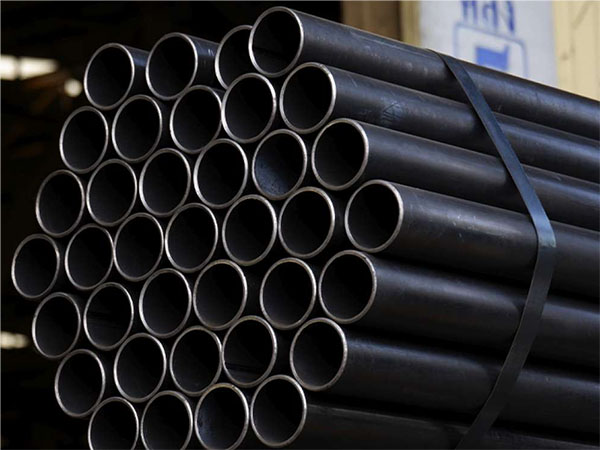
What is Carbon Steel Pipe Selection?
Carbon steel pipe selection refers to the process of choosing the most suitable pipe based on:
Mechanical performance requirements
Pressure and temperature conditions
Application environment
It is widely applied in:
Oil and gas pipelines
Construction and structural systems
Machinery and hydraulic equipment
Carbon Steel Pipe Selection Criteria
-
Manufacturing Process
Search intent keywords: seamless vs welded carbon steel pipe
Common processes:
Seamless pipes → higher strength, high-pressure applications
Welded pipes (ERW/LSAW/SSAW) → cost-effective for low to medium pressure
Key insight:
The manufacturing process directly affects pipe strength, uniformity, and reliability.
-
Surface Quality Inspection
Search intent keywords: carbon steel pipe surface defects
A high-quality carbon steel pipe should have:
Smooth surface finish
No cracks, folds, or inclusions
No visible rust or oxidation
Why it matters:
Surface defects may indicate:
Poor manufacturing quality
Reduced corrosion resistance
Potential failure risks
-
Chemical Composition
Search intent keywords: carbon steel pipe material composition
Carbon steel pipes contain:
Carbon (C) → affects strength and hardness
Manganese (Mn), Silicon (Si), etc. → improve toughness and durability
Selection logic:
Low carbon → better weldability
Medium/high carbon → higher strength
Choosing the right composition ensures:
Required mechanical properties
Adequate corrosion resistance
-
Size and Specifications
Search intent keywords: pipe size selection, wall thickness calculation
Key parameters:
Outer Diameter (OD)
Wall Thickness (WT)
Length
Critical factor:
Wall thickness determines:
Pressure resistance
Structural strength
Best practice:
Match pipe dimensions with:
Design pressure
Flow requirements
Installation conditions
-
Supplier Capability and Price Evaluation
Search intent keywords: carbon steel pipe supplier selection
Important considerations:
Supplier reputation
Quality certifications
Testing capability
Delivery stability
After-sales service
Pricing strategy:
Avoid choosing based only on lowest price
Focus on total lifecycle cost and reliability
Advanced Selection Tips
-
Application-Based Selection
High pressure systems → seamless carbon steel pipe
Structural use → welded pipe
Corrosive environment → coated or alloy-enhanced pipe
-
Standards and Specifications
Common standards:
ASTM A106 → high temperature service
ASTM A53 → general piping
API 5L → pipeline transportation
-
Inspection and Testing Requirements
Ensure the supplier provides:
Mill test certificate (MTC)
Non-destructive testing (NDT)
Mechanical test reports
Conclusion
Selecting carbon steel pipes requires a systematic evaluation of process, material, dimensions, and supplier capability.
The optimal choice is not just about price—but about achieving:
Required mechanical performance
Long-term durability
Safe and reliable operation
FAQ
- How to choose carbon steel pipe?
Check process, material, size, and supplier reliability.
- Seamless or welded pipe?
Seamless for high pressure, welded for cost efficiency.
- Why is wall thickness important?
It determines pressure resistance and safety.
- What affects pipe performance?
Chemical composition and manufacturing process.
- Is the cheapest supplier a good choice?
No. Stability and quality matter more than price.

 English
 Español