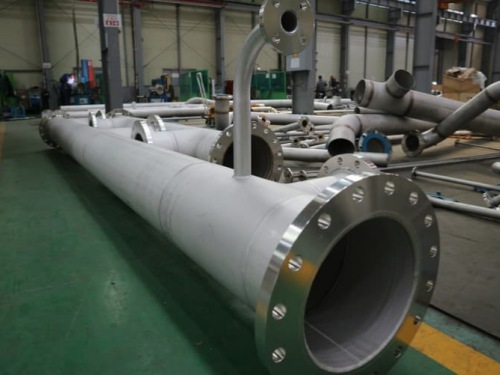
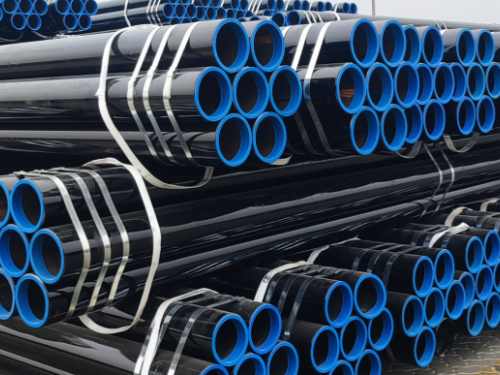
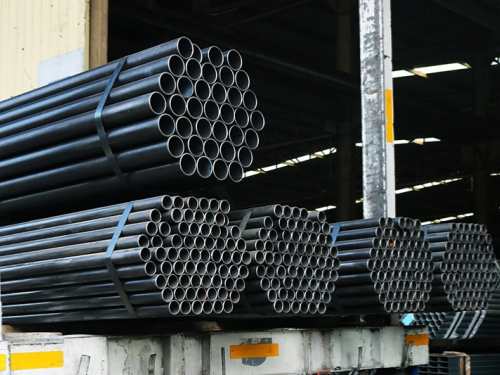
Spiral welded steel pipes (SSAW pipes) may develop residual magnetism during production, primarily due to prolonged friction and electrical welding processes. This magnetic property, if left untreated, can lead to several quality and performance issues, particularly in high-grade pipeline applications.
Impact of Residual Magnetism in SSAW Pipes
Over time, the buildup of magnetic fields in spiral pipes can:
Induce natural welding defects, such as slag inclusions and porosity
Increase the probability of incomplete penetration and cracks, especially linear defects
Compromise non-destructive testing (NDT) accuracy
Cause arc deflection during girth welding, leading to impaired joint quality
Pose a significant challenge as pipeline steel grades increase, due to stronger magnetic retention
As a result, demagnetization (degaussing) becomes a critical step before spiral welded pipes are shipped from the manufacturing facility.
Common Degaussing Methods for Spiral Steel Pipes
- AC Coil Degaussing
Method: A coil is wrapped around the pipe and connected to an alternating current. The AC is gradually reduced to zero.
Effect: The physical structure of the pipe remains unchanged. However, the pipe can be easily re-magnetized if exposed to an external magnetic field later.
- Heat Treatment Degaussing
Method: After welding, the pipe undergoes controlled heat treatment, usually in an oxygen-free environment.
Effect: Provides deep and stable demagnetization. Though the pipe’s hardness and rigidity may be altered, it becomes highly resistant to future magnetization.
- Standard Heat Treatment Cycle
Process:
Heat the pipe to a specific temperature in a non-oxidizing environment
Allow it to cool gradually over 72 hours
Result: Residual magnetism is virtually eliminated
Why SSAW Pipes Become Magnetic
The magnetism in spiral welded steel pipes originates from the DC welding process used during internal seam welding:
High current generates a strong magnetic field at the weld zone
The steel's magnetic moments align with the field, a process known as magnetization
Once the current is cut off, the magnetic field disappears, but due to magnetic hysteresis, a measurable level of remanence (residual magnetism) remains
Conclusion
Residual magnetism in SSAW pipes may seem minor, but it poses serious risks to welding quality, inspection accuracy, and long-term pipeline reliability. As such, professional degaussing—either through AC coil demagnetization or post-weld heat treatment—is a non-negotiable quality control step in the manufacturing of spiral welded pipes.

 English
 Español