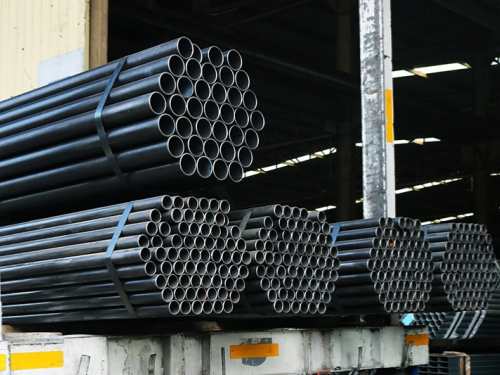
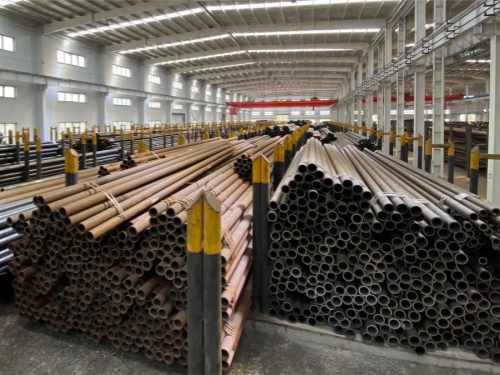
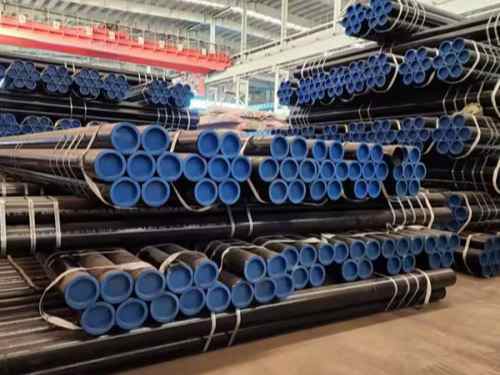
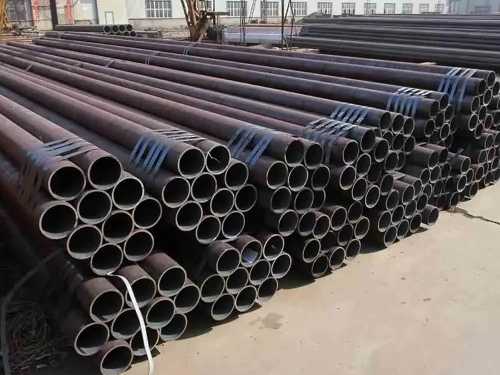
Copper-nickel pipes are widely used across marine, offshore, and industrial sectors due to their excellent strength, corrosion resistance, and long service life. In addition to outstanding performance in seawater environments, copper-nickel alloys offer excellent weldability and proven reliability, making them a preferred choice for critical piping systems.
Before selecting copper-nickel pipes for a project, understanding available pipe sizes, wall thickness options, alloy grades, and manufacturing types is essential. This guide provides a structured overview of copper-nickel pipe specifications to help engineers, procurement teams, and project managers make informed decisions.
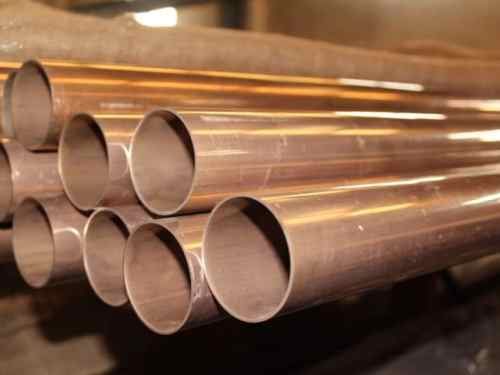
What Is a Copper Nickel Pipe?
Copper-nickel pipes (Cu-Ni pipes) are commonly used in seawater handling systems, including cooling water pipelines, desalination plants, offshore platforms, and shipbuilding applications. A complete Cu-Ni piping system typically consists of:
Copper-nickel pipes
Fittings and flanges
Valves and connectors
The two most widely used copper-nickel alloys are:
Copper Nickel 90/10 (Cu-Ni 90/10) – 90% copper, 10% nickel
Copper Nickel 70/30 (Cu-Ni 70/30) – 70% copper, 30% nickel
Both alloys are known for excellent resistance to seawater corrosion and biofouling, combined with good mechanical strength and cost-effective lifecycle performance.
Copper Nickel 90/10 is often selected for applications such as submarine systems and ship piping, where a balance of strength and corrosion resistance is required. Copper Nickel 70/30 provides higher strength and superior erosion-corrosion resistance, making it suitable for more demanding marine environments.
Why Choose Copper Nickel Pipes Over Other Materials?
Compared with materials such as aluminum alloys, brass, or stainless steel, copper-nickel pipes are increasingly preferred for seawater systems due to the following advantages:
Strength and Weldability
Cu-Ni alloys offer high structural strength and excellent weldability, simplifying fabrication and installation.
Superior Corrosion Resistance
Copper-nickel pipes perform exceptionally well under continuous seawater exposure and high-flow conditions, often without requiring additional post-manufacturing surface treatments.
Proven Long-Term Reliability
Copper-nickel piping systems have a well-documented service history, with very few early failures reported over decades of use in marine and offshore environments.
Factors to Consider When Selecting Copper Nickel Pipe Sizes
Pipe Outer Diameter and Wall Thickness
Copper-nickel pipes are available in a wide size range to meet different industrial requirements. Typical outer diameters (OD) range from 1/8 inch to 24 inches, suitable for both small-diameter utility lines and large-scale seawater transmission systems.
Wall thickness is commonly specified using pipe schedules, such as:
Sch 10
Sch 40
Sch 80
Higher schedule numbers indicate thicker walls and higher pressure ratings, making them suitable for high-pressure or high-flow applications.
Pipe Length and Manufacturing Type
Standard copper-nickel pipe lengths are usually:
6 meters (20 feet)
12 meters (40 feet)
Custom lengths can also be supplied based on project requirements.
Copper-nickel pipes are available in:
Seamless pipes – preferred for high-pressure and critical applications
Welded pipes – more cost-effective for low- to medium-pressure systems
Alloy Selection: 90/10 vs 70/30
Both Cu-Ni 90/10 and Cu-Ni 70/30 pipes are available in a broad range of sizes. Selection depends on:
Required corrosion resistance
Mechanical strength requirements
Flow velocity and erosion risk
Project budget and lifecycle cost considerations
Pipe End Types and Connection Methods
Copper-nickel pipes can be supplied with different end finishes, including:
Plain End (PE)
Beveled End (BE)
Threaded End (TE)
The choice depends on the connection method and system design.
How to Choose the Right Copper Nickel Pipe Size
When selecting copper-nickel pipe sizes for a project, key factors include:
Required flow rate
Operating pressure
Environmental conditions (seawater temperature, velocity, contamination)
Installation and maintenance considerations
Choosing the correct size and specification ensures optimal performance, long service life, and reduced maintenance costs.
For detailed dimensional data, wall thickness, and weight information, refer to the Copper Nickel Pipe Size Chart below.
Copper Nickel Pipe Size and Theoretical Weight Table
|
Nominal inch
|
OD Actual inch
|
OD Actual mm
|
WT Actual inch
|
WT Actual mm
|
Theoretical Weight (Lb/Ft)
|
Theoretical Weight (Kg/m)
|
|
SEAMLESS
|
|
1/8
|
0.405
|
10.29
|
0.058
|
1.47
|
0.24
|
0.36
|
|
1/4
|
0.54
|
13.72
|
0.065
|
1.65
|
0.38
|
0.56
|
|
3/8
|
0.675
|
17.15
|
0.065
|
1.65
|
0.48
|
0.72
|
|
1/2
|
0.84
|
21.34
|
0.065
|
1.65
|
0.61
|
0.91
|
|
3/4
|
1.05
|
26.67
|
0.065
|
1.65
|
0.78
|
1.16
|
|
1
|
1.315
|
33.4
|
0.065
|
1.65
|
0.99
|
1.47
|
|
1 1/4
|
1.66
|
42.16
|
0.072
|
1.83
|
1.39
|
2.07
|
|
1 1/2
|
1.9
|
48.26
|
0.072
|
1.83
|
1.60
|
2.39
|
|
2
|
2.375
|
60.32
|
0.083
|
2.11
|
2.32
|
3.45
|
|
2 1/2
|
2.875
|
73.03
|
0.083
|
2.11
|
2.82
|
4.20
|
|
3
|
3.5
|
88.9
|
0.095
|
2.41
|
3.93
|
5.85
|
|
3 1/2
|
4
|
101.6
|
0.095
|
2.41
|
4.51
|
6.71
|
|
4
|
4.5
|
114.3
|
0.109
|
2.77
|
5.83
|
8.68
|
|
5
|
5.563
|
141.3
|
0.125
|
3.18
|
8.29
|
12.34
|
|
6
|
6.625
|
168.3
|
0.134
|
3.40
|
10.58
|
15.75
|
|
8
|
8.625
|
219.1
|
0.134
|
3.40
|
13.84
|
20.60
|
|
SEAMLESS OR WELDED
|
|
10
|
10.75
|
273.05
|
0.134
|
3.40
|
17.30
|
25.75
|
|
12
|
12.75
|
323.9
|
0.156
|
3.96
|
23.91
|
35.58
|
|
14
|
14
|
355.6
|
0.165
|
4.19
|
27.79
|
41.35
|
|
16
|
16
|
406.4
|
0.165
|
4.19
|
31.81
|
47.33
|
|
18
|
18
|
457
|
0.180
|
4.57
|
39.02
|
58.07
|
|
20
|
20
|
508
|
0.180
|
4.57
|
43.42
|
64.62
|
|
WELDED
|
|
24
|
24
|
610
|
0.180
|
4.57
|
52.22
|
77.71
|
|
30
|
30
|
762
|
0.250
|
6.35
|
90.56
|
134.77
|
FAQ
- What are copper nickel pipes used for?
Copper nickel pipes are mainly used in seawater, marine, offshore, and cooling water systems due to their excellent corrosion and biofouling resistance.
- What is the difference between Cu-Ni 90/10 and 70/30 pipes?
Cu-Ni 90/10 offers good corrosion resistance and cost efficiency, while Cu-Ni 70/30 provides higher strength and better erosion-corrosion resistance for demanding marine conditions.
- What sizes are available for copper nickel pipes?
Copper nickel pipes are typically available from 1/8 inch to 24 inches OD, with multiple wall thickness options such as Sch 10, Sch 40, and Sch 80.

 English
 Español